

Online slot gaming has evolved dramatically since the early days when desktop computers were the only option. Today, players face a common choice between spinning reels on their computer screens or tapping their mobile devices. Each platform offers unique advantages that can significantly impact the gaming experience.
Mobile slots provide unmatched convenience and portability, while desktop slots deliver superior visual quality and comprehensive game features. The differences extend far beyond screen size, affecting everything from bonus access to game performance. Understanding these distinctions helps players choose the platform that best matches their gaming style and preferences.
This comparison examines the key factors that separate mobile and desktop slot gaming. From technical performance and game selection to bonus opportunities and security features, each platform presents distinct benefits and limitations that influence the overall gaming experience.
Core Differences Between Desktop and Mobile Slots
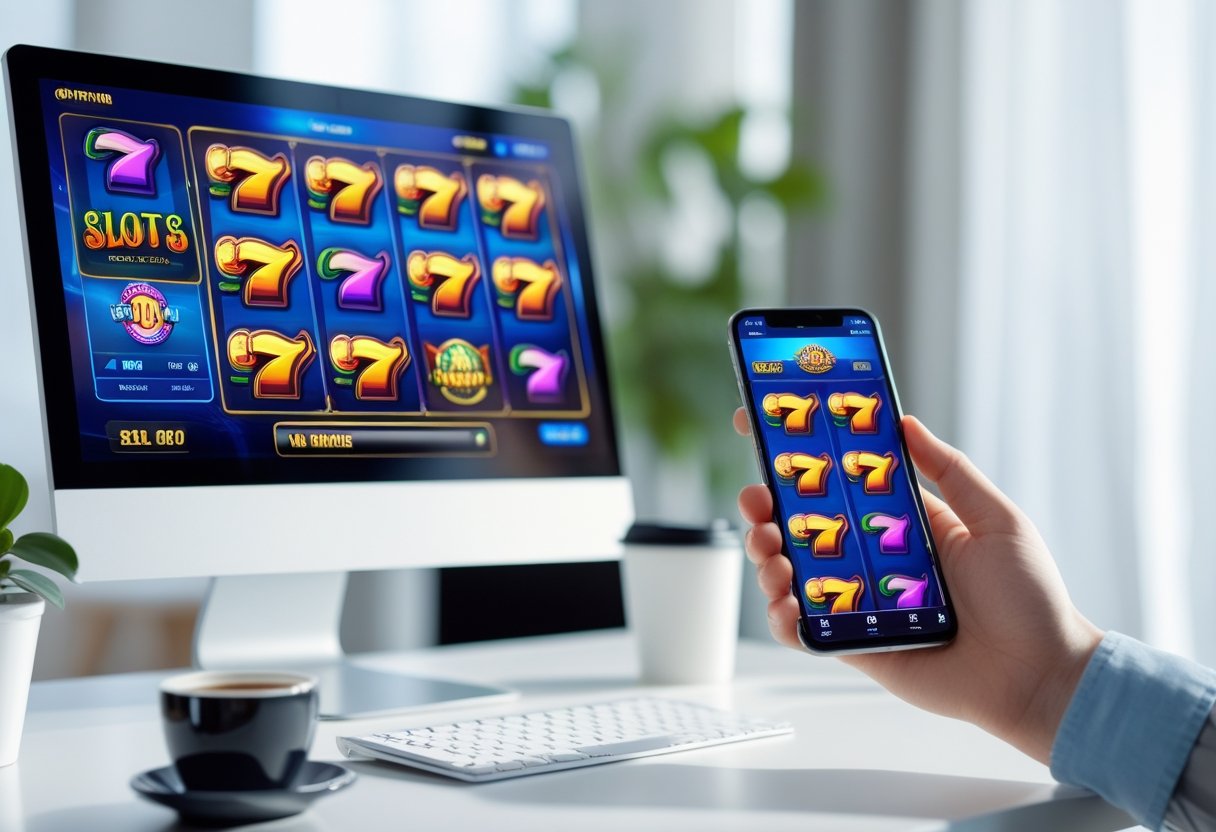
Desktop slots and mobile slots share the same core mechanics but differ significantly in how players access and interact with games. The main distinctions lie in how each platform handles user controls, device compatibility, and accessibility features.
Platform Accessibility Features
Mobile slots offer unmatched convenience for players who want to game anywhere. Players can access their favorite slot games on buses, during lunch breaks, or while waiting in line. Mobile gaming requires only a smartphone or tablet with internet access.
Desktop gaming provides a more stationary experience. Players must sit at a computer or laptop to play online slots. This setup works better for longer gaming sessions at home or in offices.
Mobile advantages:
- Play anywhere with internet connection
- Touch screen controls feel natural
- Quick access through apps
- Battery-powered portability
Desktop advantages:
- Larger screen displays more game details
- Better for extended play sessions
- More stable internet connections
- Ergonomic seating options
User Interface and Controls
Desktop slots use mouse clicks and keyboard inputs for game controls. The larger screen space allows developers to include more detailed graphics and bonus features. Players can see all game elements clearly without scrolling or zooming.
Mobile slots rely on touch controls like tapping and swiping. Developers must simplify the interface to fit smaller screens. This means some visual elements get condensed or moved to different areas.
The control differences affect gameplay speed. Mobile users can tap to spin reels quickly. Desktop users need to position their mouse cursor before clicking.
Screen size impacts how much information appears at once. Desktop versions show complete paytables and bonus rounds on one screen. Mobile versions often require scrolling to view all details.
Compatibility Across Devices
Modern slot games use HTML5 technology to work on both desktop and mobile devices. This ensures players get the same game mechanics and payout rates regardless of their chosen platform.
Desktop slots work on Windows, Mac, and Linux computers through web browsers. Players need updated browsers like Chrome, Firefox, or Safari for optimal performance. Most desktop computers handle slot games easily due to their processing power.
Mobile slots must work across different operating systems. iOS devices like iPhones and iPads run slots through Safari or dedicated casino apps. Android devices access games through Chrome browser or downloaded apps.
Some older mobile devices may struggle with graphics-heavy slot games. Desktop computers rarely face these performance issues due to better processors and memory capacity.
Cross-platform play allows players to start games on desktop and continue on mobile devices. Account progress and balances sync between platforms automatically.
Gaming Experience: Visuals, Performance, and Immersion
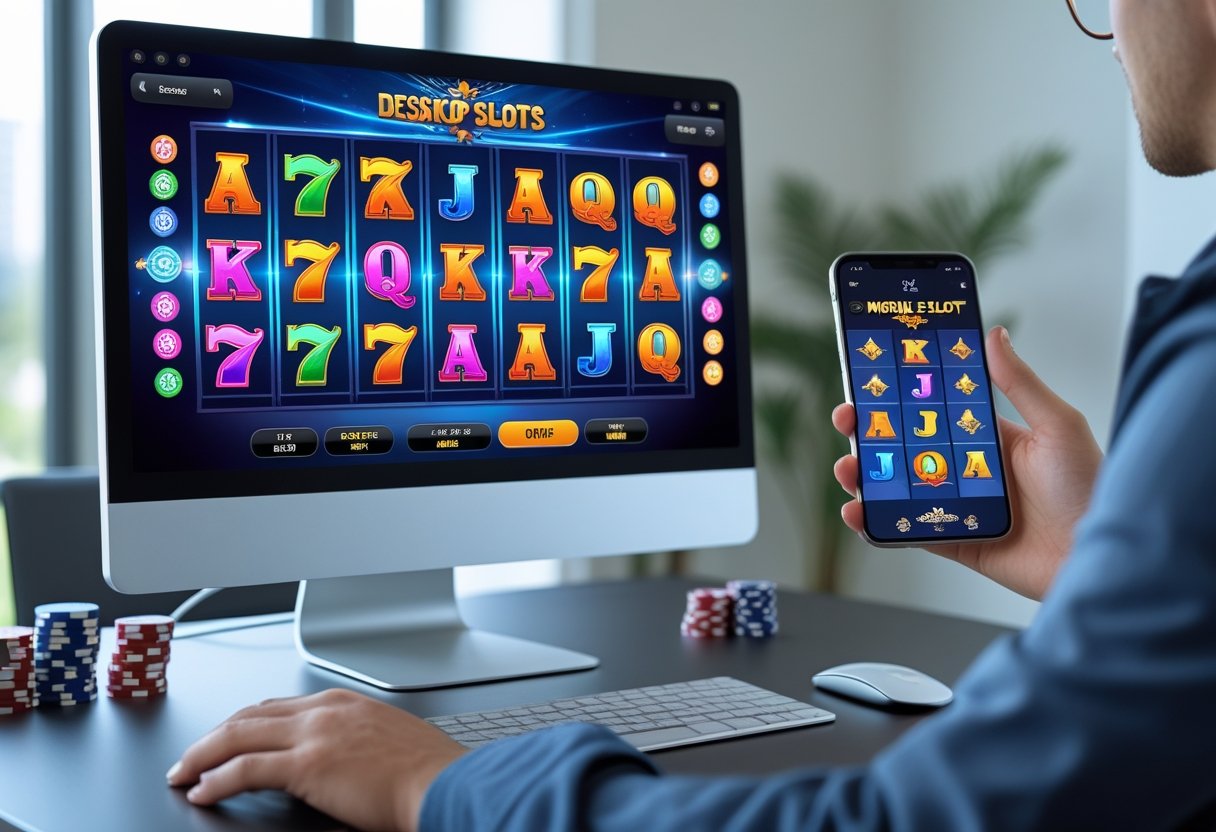
Desktop and mobile devices create different gaming experiences through screen size, graphics quality, performance speed, and audio features. Each platform offers unique benefits that affect how players enjoy slot games.
Screen Size and Larger Display Benefits
Desktop computers provide much bigger screens than phones or tablets. Most desktop monitors range from 21 to 27 inches or larger. This extra space makes slot games easier to see and enjoy.
Players can view all game details without squinting or zooming in. The reels, symbols, and bonus features appear crisp and clear. Popular games like Starburst look more detailed on larger screens.
Mobile devices typically have screens between 5 to 7 inches. While modern phones offer good quality displays, the small size limits how much players can see at once.
Key screen size differences:
- Desktop: 21-32+ inches
- Tablet: 8-12 inches
- Mobile: 5-7 inches
The larger screen also reduces eye strain during long gaming sessions. Players don’t need to hold devices close to their face or lean forward to see game elements clearly.
Graphics Quality and Animations
Desktop slot games often display better graphics than mobile versions. Desktop computers have more powerful video cards and processing power. This means smoother animations and sharper images.
Slot games use lots of visual effects like spinning reels, exploding symbols, and flashing lights. Desktop versions can handle these effects without slowing down or looking choppy.
Mobile devices have improved graphics in recent years. However, they still can’t match the visual quality of desktop computers. Game developers sometimes reduce graphics quality on mobile to save battery life and improve performance.
Graphics comparison:
- Desktop: Full HD or 4K resolution, complex animations
- Mobile: Optimized graphics, simplified effects
Some slot games look almost identical on both platforms. Others show clear differences in detail and smoothness.
Performance and Load Times
Load times differ significantly between desktop and mobile platforms. Desktop computers typically load slot games faster due to stronger processors and stable internet connections.
Mobile devices may experience slower load times, especially on older phones or weak cellular networks. WiFi connections usually work better than mobile data for gaming.
Desktop performance stays more consistent during gameplay. The powerful hardware prevents lag or freezing during bonus rounds or special features.
Performance factors:
- Processing power
- Internet connection speed
- Available memory
- Background apps running
Battery life also affects mobile gaming experience. Extended play sessions can drain phone batteries quickly, while desktop computers don’t have this limitation.
Audio and Interactive Features
Desktop computers usually have better speakers or easier connections to high-quality headphones. This creates a more immersive audio experience for slot games.
The sound effects, background music, and bonus sounds come through more clearly. Players can hear every detail without disturbing others around them.
Mobile devices offer decent audio through built-in speakers or earbuds. However, small phone speakers can’t match the quality of desktop audio systems.
Touch screens on mobile devices provide different interaction than desktop mouse clicks. Some players prefer tapping the screen directly, while others like the precision of mouse controls.
Desktop keyboards also allow for quick betting adjustments and game controls. Mobile interfaces rely entirely on touch gestures, which some players find less precise.
Convenience, Mobility, and Accessibility
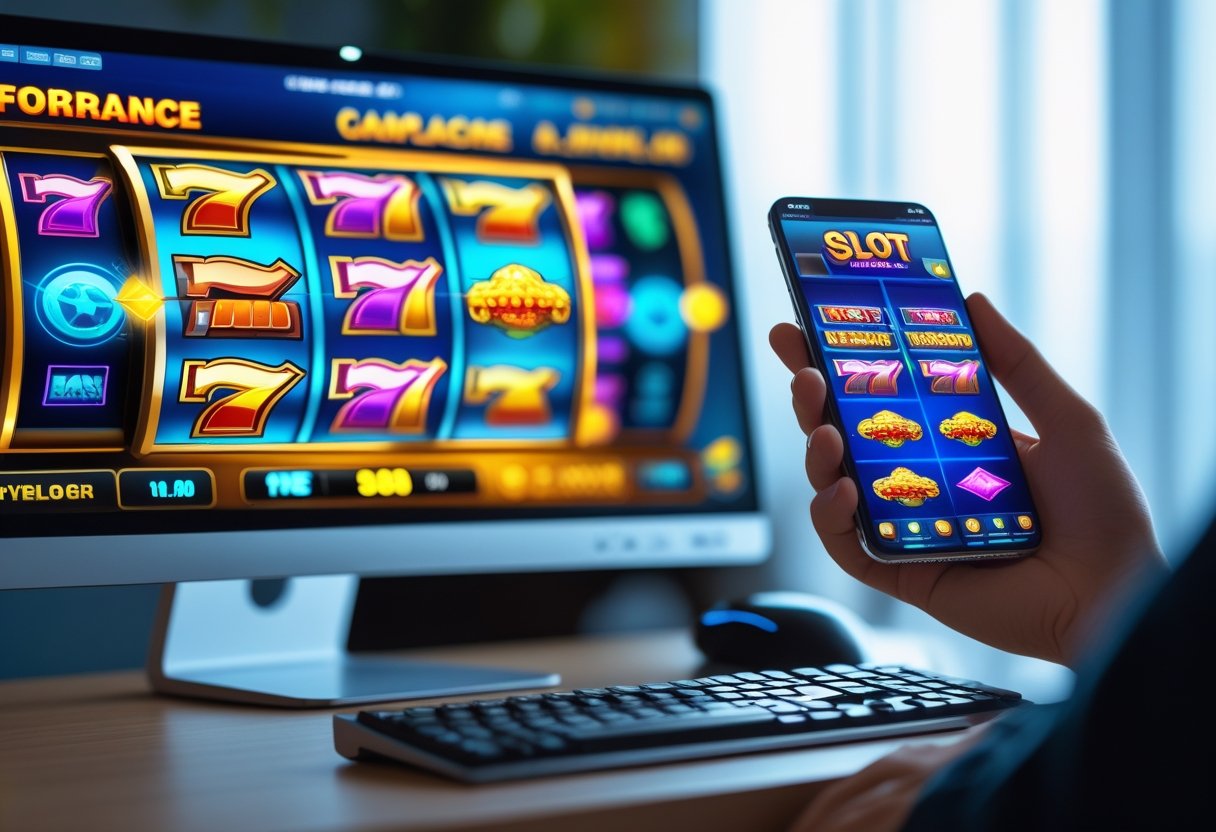
Mobile slots offer instant access from any location, while desktop versions require players to stay in one place. The choice between platforms often depends on whether someone values portability or prefers a stationary gaming setup.
Portability and On-the-Go Play
Mobile slot games give players complete freedom to play anywhere. Players can spin reels during lunch breaks, while waiting for appointments, or during daily commutes.
Modern smartphones handle mobile casinos without problems. Touch screens make it easy to tap spin buttons and swipe through game menus. Players simply pull out their phones and start playing within seconds.
Mobile gaming works well for short sessions. Players can claim free spins during brief breaks or play a few rounds between activities.
Battery life affects longer sessions. Most phones last several hours of slot play, but heavy gaming drains batteries faster than light use.
Internet connection matters for mobile slots. Players need stable wifi or cellular data to access online casinos. Weak signals can cause games to freeze or disconnect.
Mobile casinos offer the same games as desktop versions. Players get access to hundreds of slot titles, bonus features, and progressive jackpots from their pocket device.
Multi-Tasking and Stationary Play
Desktop slots require players to sit at computers or laptops. This limits where people can play but offers some benefits for certain gaming styles.
Larger screens make it easier to see game details. Players can read paytables, track bonus rounds, and watch animations more clearly on desktop monitors.
Desktop setups work better for long gaming sessions. Players can sit comfortably in chairs and play for hours without holding a device.
Multi-tasking becomes easier on desktop computers. Players can check emails, browse other websites, or run different programs while playing slots in another window.
Stable power sources help desktop gaming. Players don’t worry about battery life during extended sessions at online casinos.
Desktop versions often load faster than mobile games. Computer processors handle graphics and animations without the performance limits of phone hardware.
Some players prefer using a mouse over touch controls. Clicking spin buttons feels more precise than tapping small phone screens for certain users.
Game Selection and Software Variety
Desktop platforms typically offer more slot games than mobile versions, while mobile casinos focus on optimized titles that work well on smaller screens. Game developers often release content differently across platforms based on technical requirements.
Range of Slot Titles Available
Desktop casinos usually have larger game libraries. They can support older slot games that were built before mobile gaming became popular.
Many desktop platforms offer 3,000 to 5,000+ slot titles. This includes classic three-reel games, video slots, and progressive jackpots.
Mobile casinos typically feature 1,500 to 3,000 slot games. The selection focuses on newer releases designed for touch screens.
Popular mobile slot categories include:
- Video slots with simple interfaces
- Megaways games with dynamic reels
- Hold and win style bonus rounds
- Progressive jackpots from major developers
Desktop players can access specialty games like multi-hand slots and complex bonus features. These games often require more screen space to display properly.
Mobile slot games prioritize smooth gameplay over variety. Casino operators choose titles that load quickly and work well on different phone sizes.
Game Developers and Platform-Specific Releases
Major game developers like NetEnt, Microgaming, and Pragmatic Play create content for both platforms. However, they may release games at different times.
Desktop-first releases often happen with complex slot games. Developers test these games on computers before creating mobile versions.
Some smaller studios focus only on mobile slot development. They create games specifically for touch controls and vertical screens.
Platform exclusives are rare but do exist. Certain developers partner with specific mobile apps or desktop sites for limited releases.
Popular cross-platform developers include:
- NetEnt – Known for high-quality graphics
- Microgaming – Offers progressive jackpot networks
- Play’n GO – Specializes in mobile-optimized slots
- Evolution Gaming – Creates innovative bonus features
Game updates and new releases typically appear on desktop platforms first. Mobile versions follow within days or weeks after initial testing.
Bonuses and Promotions by Platform
Mobile casinos offer exclusive app-based bonuses and instant notifications for time-sensitive deals. Desktop platforms provide access to a wider range of promotions and comprehensive loyalty programs.
Exclusive Mobile Offers
Mobile casinos create special bonuses to attract smartphone and tablet users. These offers include app-only deposit matches and free spins for new app downloads.
Players receive push notifications about flash promotions and limited-time deals. This gives mobile users first access to bonus offers before they expire.
Common mobile-exclusive bonuses include:
- No-deposit bonuses for app installation
- Free spins credited directly to mobile accounts
- Mobile-only tournament entries
- Special weekend mobile bonuses
Payment integration makes claiming bonuses faster on mobile devices. Players can use Apple Pay, Google Pay, and biometric logins to deposit and activate bonuses quickly.
Some mobile casinos offer smaller but more frequent bonus amounts. This matches the shorter gaming sessions that mobile players typically prefer.
Desktop Promotions and Loyalty Rewards
Desktop players access a larger selection of bonus offers and promotions. Online casinos often feature their most valuable bonuses on their main website rather than mobile apps.
Desktop advantages include:
- Higher maximum bonus amounts
- More complex multi-tier promotions
- Detailed loyalty program dashboards
- Extended bonus terms and conditions
Loyalty programs work better on desktop platforms. Players can easily track their progress, view detailed point balances, and redeem rewards through comprehensive account pages.
Desktop interfaces allow casinos to display more promotion details. Players can compare different bonus offers side-by-side and read complete terms before claiming.
VIP programs typically require desktop access for full management. High-roller bonuses and personalized offers are usually handled through desktop casino platforms.
Technical and Practical Considerations
Mobile slots require different technical resources than desktop versions, affecting battery consumption and data usage. Internet connection stability and device compatibility also play crucial roles in determining which platform works best for each player.
Battery Life and Data Usage
Mobile slot games drain battery power faster than most other phone activities. Graphics-intensive slots consume the most energy, especially games with 3D animations and live dealer features.
Most slot games use between 50-150 MB per hour of gameplay. Video slots with high-quality graphics and sound effects fall on the higher end of this range.
Players can reduce battery drain by:
- Lowering screen brightness
- Closing background apps
- Using power-saving mode
- Playing simpler 2D slots instead of 3D versions
Data usage varies by game type. Basic fruit slots use around 50 MB per hour. Progressive jackpot slots that connect to networks use more data to update prize amounts in real-time.
Internet Connection: Wi-Fi vs Mobile Data
Desktop slots typically run on stable wi-fi connections that provide consistent speeds. This allows for smoother gameplay and faster loading times between spins.
Mobile players often switch between wi-fi and cellular data. Mobile data connections can cause interruptions during gameplay if signal strength drops.
Wi-fi offers several advantages:
- Unlimited data usage without overage charges
- More stable connection speeds
- Better performance for live dealer slots
- Reduced risk of disconnection mid-game
Mobile data works best for basic slot games. Complex games with streaming video may buffer or lag on slower cellular networks.
Device Requirements and Operating Systems
Desktop computers handle slot games more easily than mobile devices. Most desktop systems have enough processing power and memory to run any slot game smoothly.
Mobile gaming requires specific system requirements:
- iOS 12.0 or higher for Apple devices
- Android 7.0 or newer for most Android phones
- At least 2 GB of RAM for basic functionality
- 4 GB of RAM recommended for high-end games
Older phones may struggle with newer slot games. Frame rates drop and games may crash on devices with insufficient memory.
Mobile technology advances quickly, but not all players upgrade their devices regularly. Desktop computers typically last longer before becoming obsolete for gaming purposes.
Storage space matters more on mobile devices. Slot apps require 100-500 MB of storage space depending on the number of games included.
Fairness, Payouts, and RTP Consistency
Slot games maintain identical Return to Player percentages and fairness standards across desktop and mobile platforms. Game developers program their titles to deliver consistent payout rates and use the same Random Number Generator systems regardless of device type.
Return to Player (RTP) Ratings
The RTP percentage for any slot game remains exactly the same whether players access it on desktop or mobile devices. If a game shows 96% RTP on a computer, it delivers the same 96% rate on smartphones and tablets.
Game developers design slot titles to be platform-agnostic. This means the core mechanics, volatility levels, and payout structures stay identical across all devices.
Key RTP Facts:
- Same percentage applies to all platforms
- Testing labs verify RTP figures for accuracy
- High-RTP games offer better long-term returns
- Low-RTP slots involve higher risk levels
The Random Number Generator functions identically on mobile and desktop platforms. Players face the same odds of hitting winning combinations regardless of their chosen device.
Testing laboratories check these percentages to ensure accuracy. They verify that online gambling sites maintain consistent payout rates across different platforms.
Platform Variations and Operator Practices
While RTP rates stay consistent, some operators may offer different bonus features or promotional opportunities between platforms. Mobile slots might include touch-specific animations or simplified interfaces, but these changes don’t affect payout percentages.
Certain online gambling sites focus more resources on their mobile platforms. This can lead to exclusive mobile bonuses or faster loading times, but the underlying slot game mathematics remain unchanged.
Platform Differences:
- Interface design varies between devices
- Bonus offers may differ by platform
- Loading speeds can vary
- Core game mechanics stay identical
Players should verify that licensed operators maintain the same RTP standards across all platforms. Reputable sites display RTP information clearly for both desktop slots and mobile slots.
Frequently Asked Questions
Players often have specific questions about game availability, bonuses, user experience, device compatibility, feature access, and screen size impacts. These common concerns help players make informed decisions about their preferred platform.
Are there any differences in the selection of slots available on desktop and mobile platforms?
Most modern online casinos offer the same slot games on both desktop and mobile platforms. Game developers create titles that work across all devices.
Some older slot games may only be available on desktop computers. These games were built before mobile gaming became popular.
Mobile platforms sometimes get new games first. This happens because many players now use phones and tablets to play.
Do desktop or mobile platforms offer better bonuses for slots players?
Bonus offers are typically the same across desktop and mobile platforms. Casinos want to provide equal opportunities to all players.
Some casinos offer mobile-specific bonuses to encourage app downloads. These might include free spins or deposit matches for mobile users.
Desktop users may see more detailed bonus information due to larger screens. However, the actual bonus value remains the same regardless of platform.
How does the user experience differ when playing slots on desktop compared to mobile?
Desktop slots provide larger screens that show more game details at once. Players can see paytables, settings, and game history without switching screens.
Mobile slots use touch controls like tapping and swiping. These controls feel more interactive than clicking a mouse button.
Desktop computers often run slots more smoothly on older devices. Mobile phones with newer processors can match or exceed desktop performance.
What are the compatibility considerations for playing slots on various devices?
Modern smartphones and tablets can run most slot games without problems. Devices should have updated operating systems for best results.
Desktop computers need current web browsers to play slots properly. Chrome, Firefox, and Safari work well with most casino sites.
Internet connection speed matters more than device type. Slow connections cause games to lag or freeze on any platform.
Can players access the same features in slots games across both desktop and mobile versions?
Most slot features work the same on desktop and mobile devices. This includes bonus rounds, free spins, and special symbols.
Autoplay functions are available on both platforms. Mobile versions may have simplified autoplay menus due to smaller screens.
Some advanced features like detailed statistics may be easier to access on desktop. The features exist on mobile but might require extra taps to reach.
How does the screen size affect the playability of slots on mobile devices compared to desktop computers?
Smaller mobile screens can make slot symbols harder to see clearly. This is especially true for games with detailed graphics or small text.
Mobile screens show fewer game elements at once. Players may need to scroll or tap to access settings and information.
Touch controls on mobile devices can be more precise than mouse clicks. Players can tap exactly where they want instead of moving a cursor.