

Online gambling chargebacks allow players to dispute credit card or debit card transactions made with casinos and potentially recover their money. A chargeback is a forced reversal of a payment that a cardholder initiates through their bank or card provider when they believe a transaction was unauthorized, fraudulent, or the casino failed to deliver promised services. This consumer protection tool exists to safeguard buyers from fraud and unfair business practices.
While chargebacks can help resolve legitimate payment disputes, the process involves specific steps and requirements. Players need to understand when a chargeback claim is valid, how to properly file one, and what evidence their bank will need to investigate the dispute. Not all chargeback requests succeed, and the outcome depends on factors like the quality of documentation provided and the specific policies of the card issuer.
Filing a chargeback against an online casino also carries potential consequences that players should consider before taking action. Casinos may ban accounts, banks may scrutinize future claims more closely, and fraudulent chargeback attempts can result in legal trouble. Understanding both the benefits and risks helps players make informed decisions about whether a chargeback is the right solution for their situation.
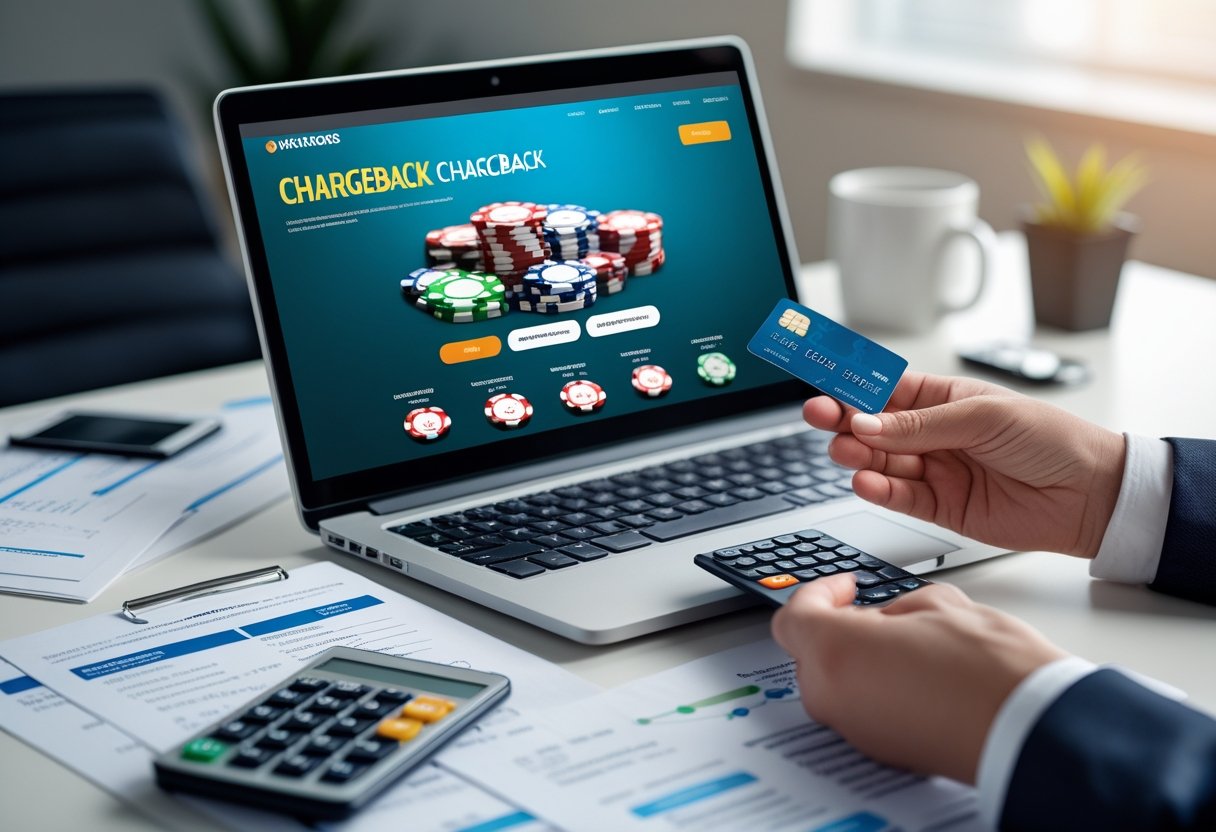
What Is a Chargeback in Online Gambling?
A chargeback in online gambling is a forced reversal of a payment that a player initiates through their bank or card issuer. This process allows players to recover funds from disputed transactions by contacting their payment provider directly rather than the casino.
Definition and Purpose
A chargeback is a transaction reversal initiated by the cardholder through their bank or credit card company. The bank investigates the disputed charge and temporarily credits the account while reviewing the claim. During this process, the financial institution contacts the online gambling site to verify the details and gather evidence from both sides.
The primary purpose of chargebacks is consumer protection. They exist to safeguard players from unauthorized transactions, fraud, and merchants who fail to deliver promised services. This mechanism gives players a way to recover money when standard refund channels fail or when dealing with unresponsive operators.
Banks evaluate each chargeback request individually. They consider the evidence provided, the nature of the dispute, and the account holder’s history with previous claims. Payment providers have different policies for handling these requests, which affects processing times and outcomes.
Differences Between Refunds and Chargebacks
Refunds come directly from the online gambling site after a player contacts customer support. The casino reviews the request and decides whether to return the funds. This process keeps the matter between the player and the operator.
Chargebacks bypass the casino entirely and involve the payment provider. Players request their bank to reverse the charge, which triggers an investigation. The bank handles the dispute instead of the gambling site’s support team.
Key differences include:
- Initiator: Refunds are requested from the casino; chargebacks are requested from the bank
- Timeline: Refunds typically process faster than chargeback investigations
- Relationship impact: Refunds maintain the player-casino relationship; chargebacks often damage it
- Fees: Chargebacks may involve fees for both parties; refunds usually don’t
How Chargebacks Protect Players
Chargebacks protect players from unauthorized transactions when someone uses their payment card without permission. If fraudulent charges appear on a statement, the cardholder can report them immediately and recover the stolen funds. The bank blocks the card to prevent additional unauthorized activity.
This protection extends to cases where gambling sites fail to deliver promised services or bonuses. When casinos become unresponsive to legitimate complaints or refuse to address payment errors, chargebacks provide an alternative resolution path. Players can dispute charges if deposits never appear in their casino accounts despite leaving their bank accounts.
The gambling industry faces challenges with chargebacks because they affect operator revenue and player trust. However, they remain necessary for legitimate fraud protection and consumer rights. Players must ensure their chargeback claims are valid and supported by evidence to avoid potential legal and financial consequences.

Common Reasons for Gambling Chargebacks
Players initiate gambling chargebacks for several reasons, ranging from legitimate fraud protection to disputes over casino practices. Unauthorized card use, withheld payouts, and service failures represent the most frequent triggers for these payment reversals.
Unauthorized Transactions and Fraud
Unauthorized transactions occur when someone uses a player’s payment card without permission to make deposits at online casinos. This includes stolen card information, identity theft, or family members making deposits without the account holder’s knowledge. Players who notice charges they did not authorize should report them immediately to their bank.
True fraud cases typically receive favorable outcomes from banks and card issuers. The cardholder must demonstrate they did not make or approve the transaction. Banks take these claims seriously and often side with cardholders when evidence supports the fraud claim.
Some players file fraudulent chargeback claims after they willingly gambled and lost money. They falsely report transactions as unauthorized to recover their losses. This practice damages the player’s relationship with banks and casinos. It can result in legal action, permanent casino bans, and difficulty opening future accounts with payment providers.
Withheld Winnings by Online Casinos
Casinos sometimes withhold winnings from players, leading to legitimate chargeback requests. Common situations include casinos refusing to process withdrawals, canceling player accounts after big wins, or citing vague terms and conditions violations. Players who win substantial amounts may face unexpected account restrictions or demands for excessive documentation.
Payment delays that extend for weeks or months without explanation give players valid grounds for disputes. Some casinos impose hidden wagering requirements or change withdrawal terms after players have already deposited funds. These practices violate consumer protection standards in many jurisdictions.
Before filing a chargeback for withheld winnings, players should document all communications with the casino’s support team. Banks require proof that the player attempted to resolve the issue directly with the merchant first. Screenshots of conversations, emails, and transaction records strengthen the case for recovering withheld funds.
Non-Delivery or Misrepresentation of Services
Casinos sometimes fail to deliver promised bonuses, free spins, or promotional offers that players deposited money to receive. Technical glitches may prevent players from accessing their accounts after making deposits. Game malfunctions can cause financial losses without providing the gambling service players paid for.
Misrepresentation occurs when casinos advertise specific games or features that do not exist on their platform. Some sites charge cards in different currencies than advertised, resulting in unexpected fees and exchange rate losses. Players may also discover that advertised payout rates or game odds do not match actual gameplay.
Service quality issues alone rarely justify chargebacks unless they involve clear breaches of advertised terms. Players must prove the casino failed to deliver what was explicitly promised at the time of deposit. General dissatisfaction with gambling outcomes does not constitute valid grounds for payment disputes.

The Online Gambling Chargeback Process
The chargeback process involves specific steps that require careful attention to detail and proper documentation. Players must understand how to gather evidence, communicate with casinos, and work with their banks to dispute gambling transactions effectively.
Step-by-Step Process Overview
The chargeback process begins when a player identifies a disputed charge on their bank or credit card statement. The player must contact their payment processor or bank to initiate a formal dispute. Most banks allow players to start this process online through their banking app or website, though some may require a phone call or in-person visit.
The bank reviews the claim and decides whether it has merit based on the evidence provided. During this time, the bank contacts the online casino to get their side of the story. The casino has the right to dispute the chargeback by submitting their own evidence.
The entire process can take several weeks to months depending on the complexity of the case. Banks evaluate each chargeback request on a case-by-case basis. The final decision depends on the quality of evidence from both parties and the bank’s specific policies regarding dispute resolution.
Gathering Documentation and Evidence
Strong evidence significantly increases the chances of a successful chargeback request. Players should collect all transaction records that show the date, amount, and merchant name for the disputed charge. Bank statements and credit card statements serve as primary proof of the transaction.
Screenshots of the player’s casino account can help support the claim. This includes transaction history from the casino website, bonus terms, withdrawal records, and account balance information. Email correspondence with the casino is particularly valuable evidence.
Players should document any attempts to resolve the issue with the casino before filing the chargeback. Payment processors view this favorably because it shows good faith effort. Keep records of chat transcripts, support ticket numbers, and response times from the casino’s customer service team.
Communicating with the Casino
Players should contact the casino’s customer support team before initiating a chargeback request. Many issues can be resolved directly through the casino’s payment team without involving the bank. This approach is faster and avoids potential complications.
The player should clearly explain the problem and provide supporting documentation. Common issues include deposits that didn’t appear in the casino account, unauthorized transactions, or promised bonuses that were never credited. The casino may escalate the case to a specialized department for investigation.
If the casino is unresponsive after a reasonable period, players can proceed with the chargeback. Repeated chargebacks without attempting to resolve issues directly may damage the player’s reputation with payment processors.
Filing a Chargeback Request with Your Bank
Players can file a chargeback request by logging into their online banking account and locating the disputed transaction. Most banks provide a “dispute charge” or similar option next to each transaction. The bank will ask for the reason for the dispute and request supporting documentation.
The player must provide all gathered evidence through the bank’s online portal or submission process. This includes transaction records, screenshots, and communication logs with the casino. Banks typically provide a reference number to track the claim’s progress.
Banks investigate by reviewing the evidence and contacting the merchant. The player should respond promptly to any requests for additional information. The bank will notify the player once they make a final decision, which can take 30 to 90 days depending on the complexity of the case and the bank’s procedures.
Limitations and Risks of Gambling Chargebacks
Chargebacks come with strict requirements and potential consequences that players need to understand before filing. Banks evaluate claims based on specific criteria, and unsuccessful disputes can lead to account restrictions, financial penalties, and damaged relationships with both payment providers and gaming platforms.
Situations Where Chargebacks Are Denied
Banks deny chargebacks when evidence fails to support the player’s claim or when the dispute lacks valid grounds. Simply losing money through normal gameplay does not qualify as a legitimate reason for a chargeback. Gambling losses are considered accepted risks when players voluntarily place bets.
Common reasons for denial include:
- Disputes filed beyond the bank’s time limit (typically 60-120 days)
- Insufficient or unclear evidence supporting the claim
- Claims based on buyer’s remorse or gambling losses
- Previous chargeback history on the account
- Clear transaction authorization from the cardholder
Payment providers review each case individually and give merchants the opportunity to present counter-evidence. When casinos provide proof of service delivery, transaction authorization, and compliance with stated terms, banks frequently rule in their favor. Players who file fraudulent claims face serious consequences including legal action and permanent account closure.
Casino Terms and Conditions Impact
Casino terms and conditions serve as binding agreements that significantly affect chargeback outcomes. Players who accept these terms during account registration agree to specific rules about deposits, withdrawals, and bonus usage. Banks consider these agreements when evaluating disputes.
Key terms that impact refunds include wagering requirements, bonus conditions, and verification procedures. When players request chargebacks after breaking these rules, casinos submit the terms as evidence. This documentation typically results in the claim being denied.
Payment providers view violations of agreed-upon terms as invalid grounds for disputes. Players who fail to meet withdrawal minimums, complete identity verification, or satisfy bonus requirements cannot claim the casino failed to deliver services. The signed agreement proves both parties understood the conditions.
Effect on Gaming Experience and Player Accounts
Filing chargebacks creates immediate and lasting consequences for player accounts. Casinos typically freeze or permanently close accounts under investigation for chargebacks. This action prevents further deposits and blocks access to any remaining account balance.
Multiple chargeback requests damage relationships with payment providers and reduce approval rates for future legitimate claims. Banks flag accounts with chargeback patterns and apply increased scrutiny to all subsequent disputes. Credit scores can drop when banks determine claims were fraudulent.
Long-term impacts include:
- Permanent bans from casino platforms and sister sites
- Blocked payment methods across multiple gambling operators
- Difficulty opening new gaming accounts
- Legal action for fraudulent chargeback claims
- Fees ranging from $20-$100 per chargeback
Operators share information about problem accounts through industry databases. A chargeback at one casino can result in restrictions at other licensed gambling sites. Players lose access to loyalty programs, accumulated rewards, and promotional offers.
Chargeback Fraud, Abuse, and Industry Challenges
Chargeback fraud represents a major threat to online gambling platforms, with players exploiting payment reversal systems to recover funds after legitimate gameplay. These disputes drain resources through fees, administrative costs, and potential loss of payment processing capabilities.
Understanding Friendly Fraud
Friendly fraud occurs when a player initiates a chargeback despite making a legitimate transaction. The player contacts their bank or card issuer claiming they didn’t authorize the charge or don’t recognize the transaction. In reality, they made the deposit, played games, and now want their money back.
This type of fraud is particularly common in online gambling. A player might lose money during gameplay and then dispute the charge with their bank. They might claim the transaction was unauthorized or that they never received the service.
Banks often side with cardholders in these disputes. This creates a system that players can easily abuse. The gambling operator must then provide extensive documentation to prove the transaction was valid, which takes time and resources.
Chargeback Abuse by Players
Some players deliberately abuse the chargeback system as a strategy. They make deposits using stolen credit card details, play games, and disappear before the fraud is detected. Others use disposable email addresses and fake identity information to avoid accountability.
Common abuse patterns include:
- Testing stolen cards with small deposits before making larger transactions
- Claiming bonuses immediately after signup and then disputing all deposits
- Creating multiple accounts to exploit promotional offers and then requesting chargebacks
- Waiting until after withdrawing winnings to dispute their original deposits
Players who engage in bonus abuse often follow up with chargeback requests. They exploit welcome bonuses and promotional campaigns, extract maximum value, and then reverse their payments. This behavior is difficult to detect until the chargeback appears weeks later.
Impact on Gambling Operators
Every chargeback costs operators money regardless of whether the transaction was legitimate. Card networks charge administrative fees that typically range from $20 to $100 per dispute. These fees apply even when operators successfully contest the chargeback.
High chargeback ratios create serious business problems. Operators who exceed acceptable thresholds face increased processing fees from payment providers. Card networks classify gambling as high-risk, making these penalties even more severe.
Excessive chargebacks can result in losing access to major payment methods entirely. Payment processors may terminate relationships with operators who can’t maintain acceptable chargeback levels. This forces businesses to rely on alternative payment methods that players may not prefer.
Fighting chargebacks requires dedicated staff and detailed record-keeping. Operators must collect and organize transaction logs, player communication records, and identity verification data. The representment process demands knowledge of complex card network rules and significant time investment.
Industry Responses to Fraudulent Activity
Gambling operators now implement stronger verification during account creation. They screen for suspicious patterns like mismatches between card issuing countries and player IP addresses. Digital footprint analysis helps identify players using disposable contact information or fake credentials.
Key prevention strategies include:
- BIN lookups to verify card details match player location data
- Machine learning systems that detect unusual deposit patterns
- Enhanced KYC procedures requiring identity document verification
- Real-time monitoring for sudden spikes in account activity
Operators use risk scoring systems to flag potentially fraudulent behavior before chargebacks occur. These systems assign confidence scores based on multiple data points. When combined signals indicate high risk, operators can apply additional verification steps or temporarily freeze suspicious accounts.
Payment service providers now offer specialized tools for high-risk industries. These include 3D Secure authentication, alert systems from Ethoca and Verifi, and automated dispute management platforms. Some operators reduce chargeback processing time from 45 minutes to just 5 minutes using AI-powered fraud detection systems.
Key Concepts and Practical Guidance for Players
Players need to understand the technical aspects of chargebacks and the specific procedures that banks and casinos follow. Understanding reason codes, payment processor roles, bonus rules, and dispute strategies helps players make informed decisions when problems arise.
Reason Codes and Representment
Reason codes are specific numbers or labels that banks use to categorize why a chargeback was filed. Each payment network like Visa or Mastercard has its own set of codes. Common codes include unauthorized transactions, services not provided, and processing errors.
When a player files a chargeback, the casino receives these reason codes along with the dispute. The casino then enters a process called representment, where they submit evidence to challenge the chargeback claim. This evidence might include transaction logs, account activity records, or chat transcripts with the player.
Banks review both sides of the story during representment. They look at the reason code to determine what type of evidence matters most. For unauthorized transaction claims, banks focus on security measures and verification records. For service disputes, they examine whether the casino delivered what was promised.
Players should choose the correct reason code when filing disputes. Using the wrong code can result in an automatic denial. Banks also track how often players file chargebacks under specific codes.
Role of Payment Processors in Online Casinos
Payment processors act as the middleman between players, banks, and casinos. They handle deposits, withdrawals, and the technical aspects of transferring money. Popular processors in online gambling include companies that specialize in high-risk transactions.
These processors maintain security systems that detect potential fraud or suspicious activity. They monitor transaction patterns and flag unusual behavior like rapid deposits or immediate withdrawal requests. When a chargeback occurs, the processor coordinates communication between the bank and the casino.
Different processors have different policies for handling chargebacks. Some charge the casino fees for each chargeback received, regardless of the outcome. Others provide dispute management services to help casinos respond to claims effectively.
Players should note that processors can blacklist payment methods after multiple chargebacks. This means a debit card or credit card might get blocked from future gambling transactions across multiple casino sites that use the same processor.
How to Avoid Bonus Abuse
Bonus abuse happens when players violate promotional terms to gain unfair advantages. Casinos define this as deliberately exploiting bonuses through prohibited betting patterns or creating multiple accounts. This behavior can trigger account closures and chargeback disputes from both sides.
Common bonus abuse tactics include:
- Creating multiple accounts to claim the same welcome bonus repeatedly
- Betting on opposite outcomes in games to meet wagering requirements with minimal risk
- Using payment methods that don’t qualify for bonuses but claiming them anyway
- Withdrawing immediately after meeting minimum wagering without genuine gameplay
Players must read bonus terms carefully before accepting offers. Wagering requirements specify how many times a player must bet the bonus amount before withdrawing. Game restrictions list which games count toward meeting these requirements.
Casinos track player behavior through sophisticated software. They can detect patterns that suggest bonus abuse and void winnings or close accounts. If a player files a chargeback after being accused of bonus abuse, the casino will present this evidence during representment.
Best Practices for Dispute Resolution
Players should always contact casino customer support before filing a chargeback. Many payment issues result from simple errors that support teams can fix quickly. This approach maintains a positive relationship with the casino and avoids potential blacklisting.
Document everything related to the transaction. Save screenshots of deposits, withdrawal requests, bonus terms, and all communication with the casino. Banks require this evidence when evaluating chargeback disputes.
Steps for effective dispute resolution:
- Contact customer support through multiple channels if needed
- Provide clear descriptions of the problem with transaction details
- Give the casino reasonable time to investigate (typically 3-5 business days)
- Escalate to payment processor or regulatory body if the casino is unresponsive
- File a chargeback only as a last resort for legitimate issues
Players should understand that filing chargebacks has consequences. Multiple chargebacks can damage relationships with banks and payment processors. Future gambling deposits might get declined, and some casinos share chargeback information across the industry.
Valid reasons for chargebacks include unauthorized transactions where someone else used the card, technical errors that charged accounts multiple times, or casinos that refuse legitimate withdrawals. Invalid reasons include losing money through normal gameplay or buyer’s remorse about gambling losses.
Frequently Asked Questions
Players often face confusion about the rules, risks, and outcomes when disputing casino charges with their banks. The chargeback process varies based on the reason for the dispute, the casino’s licensing status, and how both parties present their evidence.
What steps need to be taken to dispute a charge from an online casino?
The first step requires gathering all relevant documentation before contacting the bank. Players should collect transaction records, screenshots of their casino account, copies of all communications with the casino, and any evidence that supports their claim.
Players must attempt to resolve the issue directly with the casino before filing a chargeback. This involves sending a formal complaint that explains the problem and identifies any violated terms or regulations. The casino typically receives 7-14 days to respond.
After exhausting direct resolution attempts, players contact their bank’s dispute department to file the chargeback. They must explain the situation clearly and submit all collected evidence. Banks may request additional information during their investigation, which typically takes 30 to 90 days to complete.
Are there any legal consequences for initiating a chargeback on gambling transactions?
Filing fraudulent chargebacks to recover standard gambling losses carries serious consequences. Banks may close accounts, payment providers can blacklist users, and casinos might pursue legal action for what they consider theft of services.
Players who file legitimate chargebacks for unauthorized charges, withheld winnings, or unlicensed casino operations face minimal legal risk. These situations fall under consumer protection rights that chargebacks were designed to address.
Some casinos include clauses in their terms and conditions that threaten legal action against any chargeback attempts. However, these threats rarely materialize when players have valid grounds for their dispute. Banks recognize consumer protection rights regardless of merchant agreements.
How does the chargeback process work for unauthorized online gambling charges?
Unauthorized charges represent one of the strongest grounds for a successful chargeback. Players must report these transactions to their bank immediately and file a fraud claim. The bank typically issues a temporary credit while investigating.
The player needs to demonstrate they did not authorize or approve the charges. This might include proving someone else accessed their card details, showing they never created an account with the casino, or providing evidence of identity theft.
Banks treat unauthorized gambling charges the same as any fraudulent transaction. The casino must prove the cardholder authorized the transaction, which becomes difficult when players have documented evidence of fraud. Most unauthorized charge disputes resolve in favor of the cardholder.
Can consumers expect a refund from unlicensed gambling sites through chargebacks?
Unlicensed casinos provide one of the most valid reasons for chargeback approval. Banks recognize that unlicensed operators often violate consumer protection laws and may not deliver promised services legitimately.
Players must provide evidence that the casino lacks proper licensing in their jurisdiction. This might include screenshots of the casino’s website showing no license information, regulatory warnings from gambling authorities, or documentation that the operator is blacklisted.
Success rates for chargebacks against unlicensed casinos tend to be higher than other gambling disputes. Banks understand that deposits to illegal gambling operations fall outside normal merchant-consumer relationships. The casino’s ability to contest these chargebacks remains limited due to their unlicensed status.
What options are available for addressing gambling-related transactions due to mental health issues?
Some banks offer specialized dispute processes for vulnerable customers with documented gambling addiction. Players need to provide medical documentation or proof of enrollment in problem gambling programs to support their claims.
Payment blocking services allow players to prevent future gambling transactions before they occur. Many banks now offer these blocks as part of responsible gambling initiatives, though they don’t reverse past transactions automatically.
Chargebacks based solely on gambling addiction face significant challenges without additional factors like unauthorized charges or unlicensed operators. The player voluntarily made these transactions at the time, which weakens the chargeback argument. Legal assistance may help build stronger cases that incorporate regulatory violations or breach of duty of care by operators who ignored self-exclusion requests.
In chargeback disputes with online gambling merchants, whose argument typically prevails?
The outcome depends heavily on the specific reason for the dispute and the quality of evidence both parties present. Banks approve chargebacks when players demonstrate clear violations like unauthorized charges, unlicensed operations, or withheld winnings without valid cause.
Casinos successfully defend against chargebacks when players simply lost money through normal gambling or violated terms and conditions. Licensed operators maintain detailed records of player activity, accepted terms, and delivered services that strengthen their position.
Banks reject approximately 60-70% of gambling chargebacks according to industry estimates. The high rejection rate reflects attempts by players to recover ordinary gambling losses rather than legitimate disputes. Players with documented evidence of fraud, misrepresentation, or regulatory violations see significantly higher success rates approaching 70-80%.